In line with its vision of sustainable mining that respects both people and the environment, Altınordu Madencilik adopts a comprehensive approach aimed at addressing the economic, social, and environmental expectations of its local stakeholders. Within this framework, the company seeks to contribute to the improvement of social and economic life and to the enhancement of prosperity in the region where the Balıkesir Karlık Gold Mine is located.
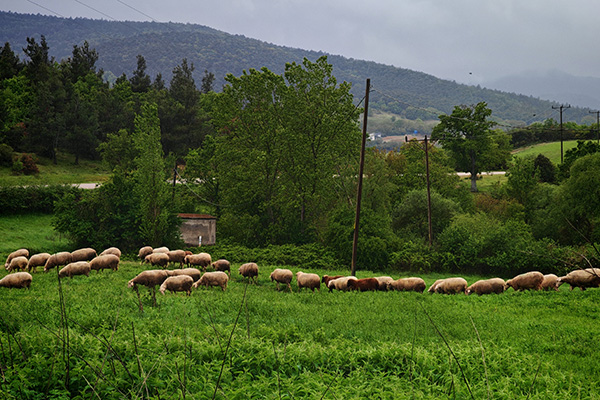
The Karlık and Söbücealan neighborhoods, which fall within the primary area of influence and consist of approximately 55 households and a population of 135, are home to an aging population whose livelihoods largely depend on livestock farming. Social opportunities are limited, and economic activity remains constrained. Through infrastructure investments, social support initiatives, and sustainability projects to be implemented primarily in these two settlements for the public benefit, the goal is to address local needs and support sustainable development. Initial steps in this direction have already been taken.
INFRASTRUCTURE SUPPORT
Subject to public benefit considerations, initiatives are planned to improve existing infrastructure through the renovation of village roads, optimization of water resources, and enhancement of social facilities to make them more functional. The long-term objective of these efforts, carried out in collaboration with local communities, is to improve social welfare through the sustainable use of regional natural resources.
Local residents will be engaged throughout every phase of the project, with transparency and collaboration serving as key principles in decision-making processes.
LOCAL EMPLOYMENT
In proportion to the operational cycle of the Balıkesir Karlık Gold Mine, priority is planned to be given to local human resources in meeting employment needs. Additionally, indirect employment opportunities are expected to be created through required services and supporting industries. During the operational phase, the workforce is expected to reach approximately 900 employees, with a target of at least 50% being sourced locally from communities within the first and second-degree areas of influence, as well as from Balya and Balıkesir. In addition to direct employment, indirect employment generated during operations is projected to reach approximately 5,000 jobs. Through these contributions, the project aims to encourage reverse migration to villages that have experienced population decline among younger generations, revitalize social life, and enhance regional prosperity.
LOCAL PROCUREMENT
In line with the operational cycle of the Balıkesir Karlık Gold Mine, local suppliers are planned to be prioritized whenever possible. By sourcing goods and services from local producers and suppliers in a manner that serves the public interest, the project aims to stimulate economic activity and contribute to long-term prosperity. Although mining operations have not yet commenced, implementation of these plans has already begun. A local procurement model has been established through a cooperative formed by residents of Karlık and Söbücealan, enabling purchases from local businesses.
ECONOMIC PROSPERITY
Through the efficient use of local resources, the project aims to contribute to the revitalization of the local economy and the enhancement of long-term prosperity. As part of this objective, social support programs focusing on livestock farming and beekeeping have already begun to be implemented.
SUPPORTING LIVESTOCK FARMING
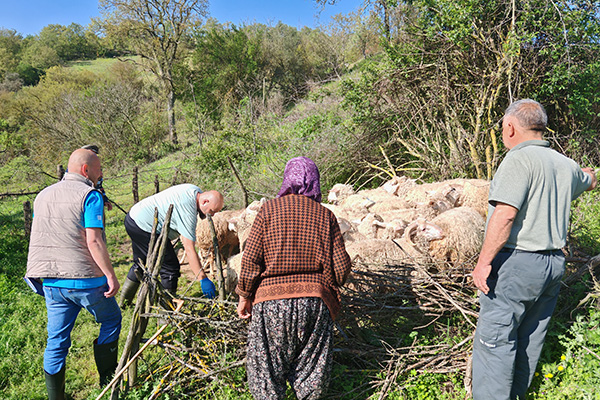
The project aims to provide periodic veterinary care, vaccinations, nutritional support, and both theoretical and practical training for local livestock producers in areas such as small and large-scale animal husbandry, animal shelter improvement, and disease prevention. Even before mining operations have commenced, veterinary services, vaccination programs, and training support have already been provided to local residents. All animal health needs, including medication, supplements, and routine care, are being met except for surgical interventions. As a result of these efforts, carried out under the coordination of specialist veterinarians for the past year, twin lamb births have increased and animal mortality rates have declined. In particular, thanks to the program implemented in two villages engaged in small livestock farming, the number of animals has increased by approximately 30% within a single year.
REVITALIZING BEEKEEPING
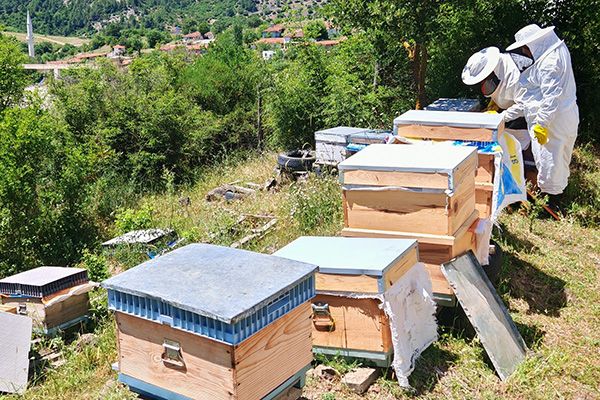
Through training programs focused on modern beekeeping techniques, the project aims to increase the capacity of existing beekeepers while providing hive and equipment support to individuals interested in entering the sector. The long-term objective is to revive beekeeping in the region and create sustainable economic value. Although the mine has not yet entered the operational phase, beehives have already been supplied to two villages and hands-on training programs have been launched to revive beekeeping activities that had previously disappeared from the area.
As a result of the program carried out over the past year, the number of beekeepers in the two villages has increased from 4 to 22, while the number of beehives has grown from 10 to 180. Through a comprehensive support program that includes hives, consumable materials, bee colonies, and practical on-site training, the project seeks to encourage honey production and create new economic value that did not previously exist in the region.
PASTURE SUPPORT
Improvements to existing pasture areas, support for forage crop cultivation, and the development of livestock drinking water infrastructure are also among the project's long-term sustainable development objectives. Rehabilitation efforts have already been initiated for pasture lands that have lost their productive characteristics.
The introduction of new, high-value agricultural products not currently cultivated in the region, support for women's handicrafts, and the creation of additional income opportunities through women's cooperatives are among the social support programs planned for implementation during the operational phase.